
Loading...
Loading...
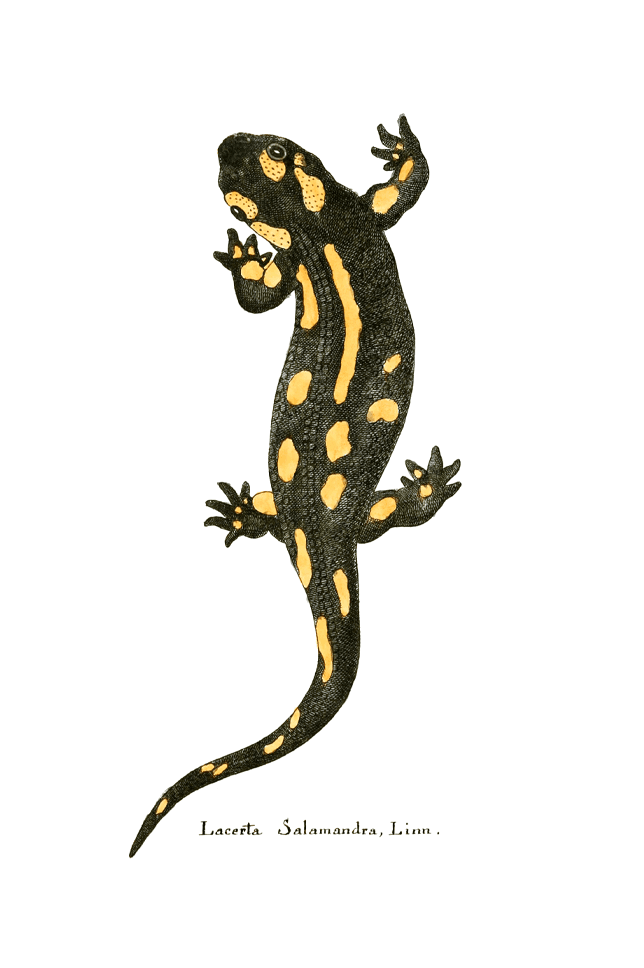
Salamander
Za ten zakup otrzymasz 14 Poziomek
Zbieraj punkty w programie Poziomki i wymieniaj na rabaty oraz nagrody.
A beautiful poster showcasing a sophisticated illustration of the spotted salamander, drawn from the work “Gemeinnüzzige Naturgeschichte des Thierreichs” by G.H. Borowski and J.F.W. Herbst, featuring hand-colored graphics by D.F. Sotzmann. Published in Berlin by Gottlieb August Lange between 1780–1789.
Borowski and Herbst in this work combine the rigor of scientific documentation with the finesse of artistic woodcuts, making their illustrations both credible for naturalists and delightful in aesthetic form.
The spotted salamander is a large tailed amphibian (up to 20 cm long), with distinctive black and yellow coloring, inhabiting the moist forests of Central Europe. Primarily active at night, it shelters under stones and tree bark, secreting toxins as a defense mechanism. It lays eggs in damp crevices, and the larvae develop in streams, leaving the water after metamorphosis. With its longevity (up to 30 years) and regenerative abilities, the spotted salamander fascinates both scientists and nature enthusiasts.
We photograph each illustration in ultra-high resolution and carefully remove age spots, restoring its brilliance from centuries ago.
Receive letters from our Workshop — new arrivals, inspiration, and special offers.
We respect your privacy. You can unsubscribe at any time.
