
Loading...
Loading...
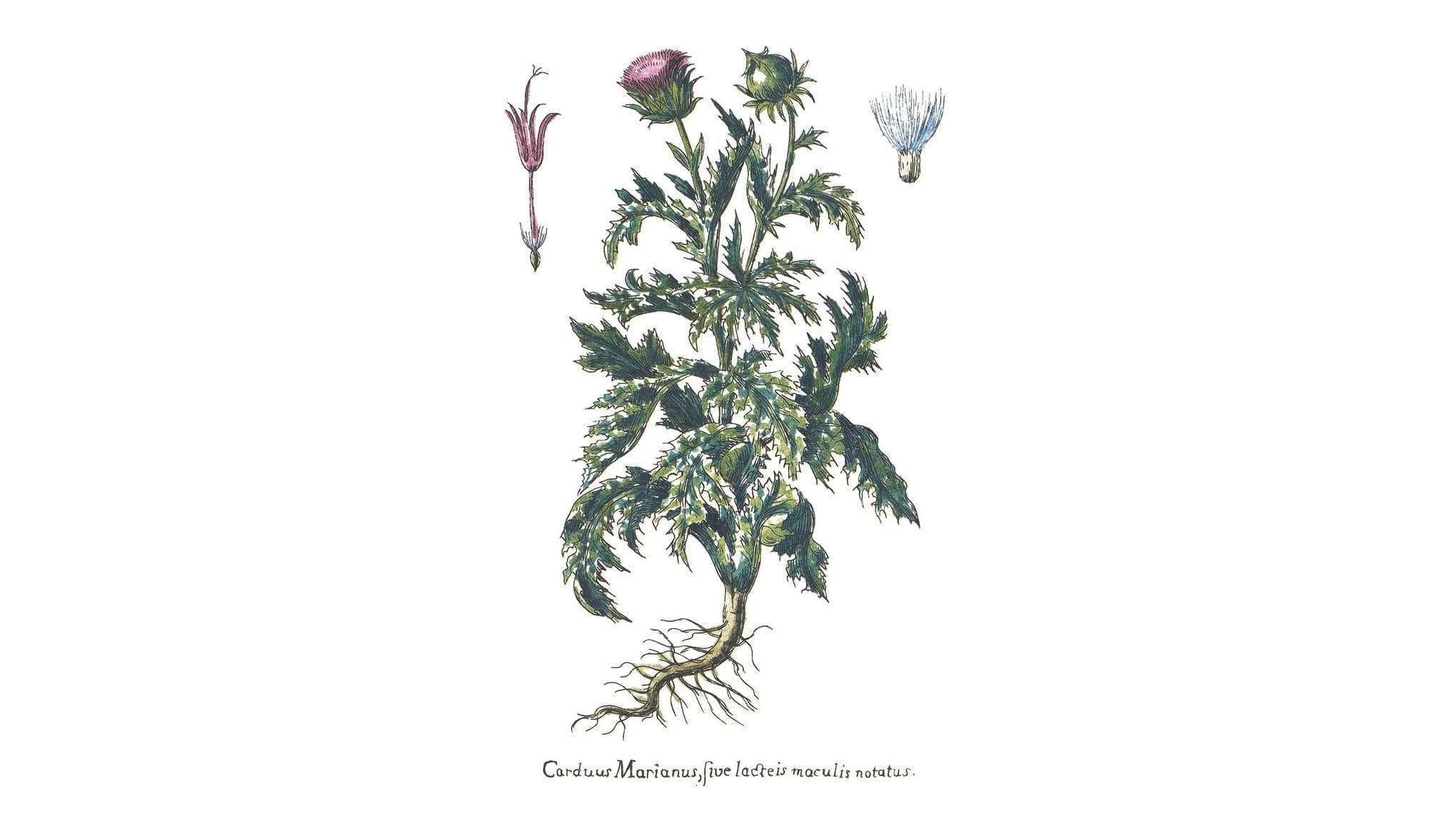
"Would you keep in good health all year through? - eat milk thistle; it is the wisest thing to do."
The medicinal properties of milk thistle have been known since antiquity and the Middle Ages.
The Latin name was given to this plant by the Greek physician Dioscorides (c. 100 BCE). The species name marianum is associated with the Virgin Mary. According to legend, when in the Bethlehem stable she was nursing the infant, drops of milk fell upon the leaves of the thistle, causing the white spots to appear upon them.
The herbal raw material of milk thistle is its seeds (especially the husks). They contain silymarin, flavonoids, amines (histamine, tyramine), organic acids, mucilage, vitamins C and K, phytosterols, tannins, proteins, sugars, oil rich in linoleic acid, and mineral salts (copper, selenium, zinc).
Most important is silymarin—a powerful antioxidant. It is regarded as an adaptogen, a substance that stimulates and strengthens both body and mind.
It has anti-inflammatory, antispasmodic, and antithrombotic effects, and stimulates the production of new liver cells (thus protecting the liver from numerous toxins). In addition, it aids digestion, promotes lactation in nursing women, and regulates the skin’s secretion of sebum. It supports anticancer therapies and helps with migraines, endometriosis, and gallstones.
Milk thistle is a plant beneficial for the young as well as the old. It is considered safe even for pregnant women and nursing mothers. It is well worth using preventively as a remedy that supports immunity.
Would you keep in good health all year through?
- eat milk thistle; it is the wisest thing to do.
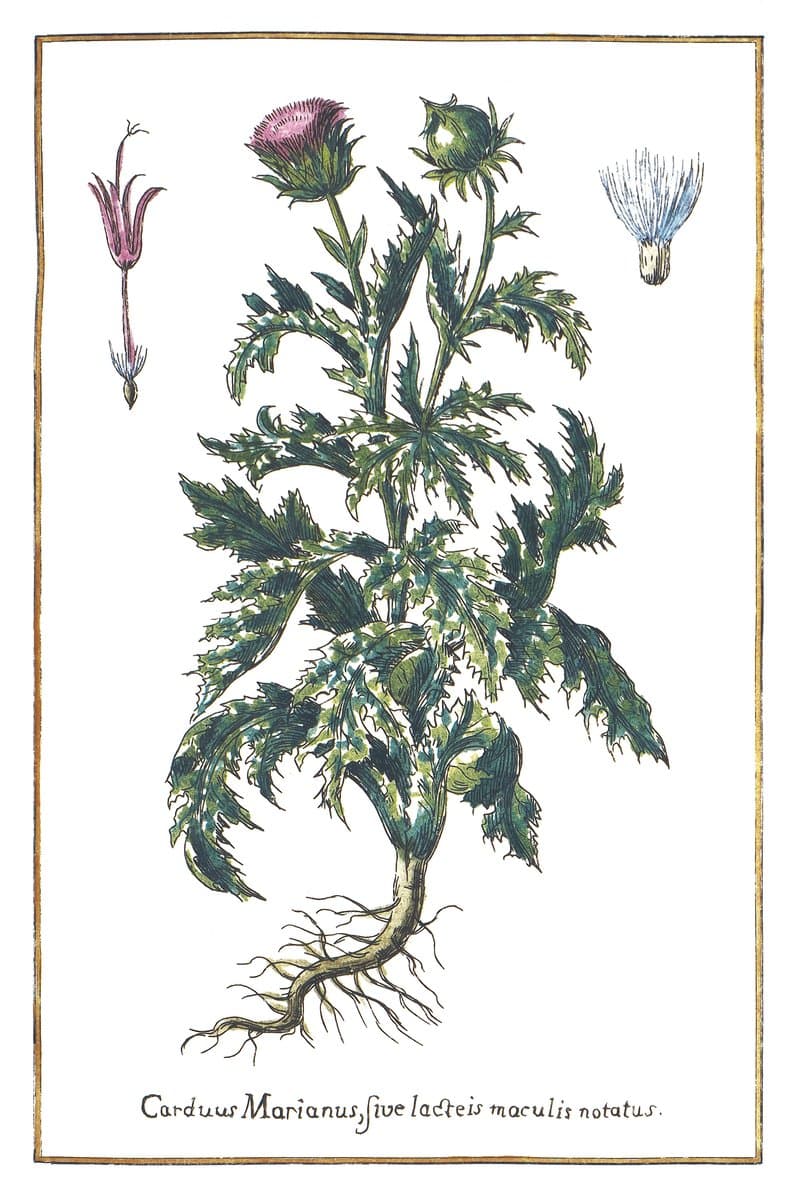
Carduus Marianus, Sive Lacteis Maculis Notatus
from 14.00 zł